The ECO4 Insolvency Crisis: Why the UK’s Retrofit Industry is Facing a "Cataclysmic" Collapse
Highest Since 2008: Analyzing the record-breaking insolvency levels currently hitting the UK construction and retrofit sectors
Share this article
Don't keep this knowledge to yourself!
Audio Version Available
Listen to this article while you multitask
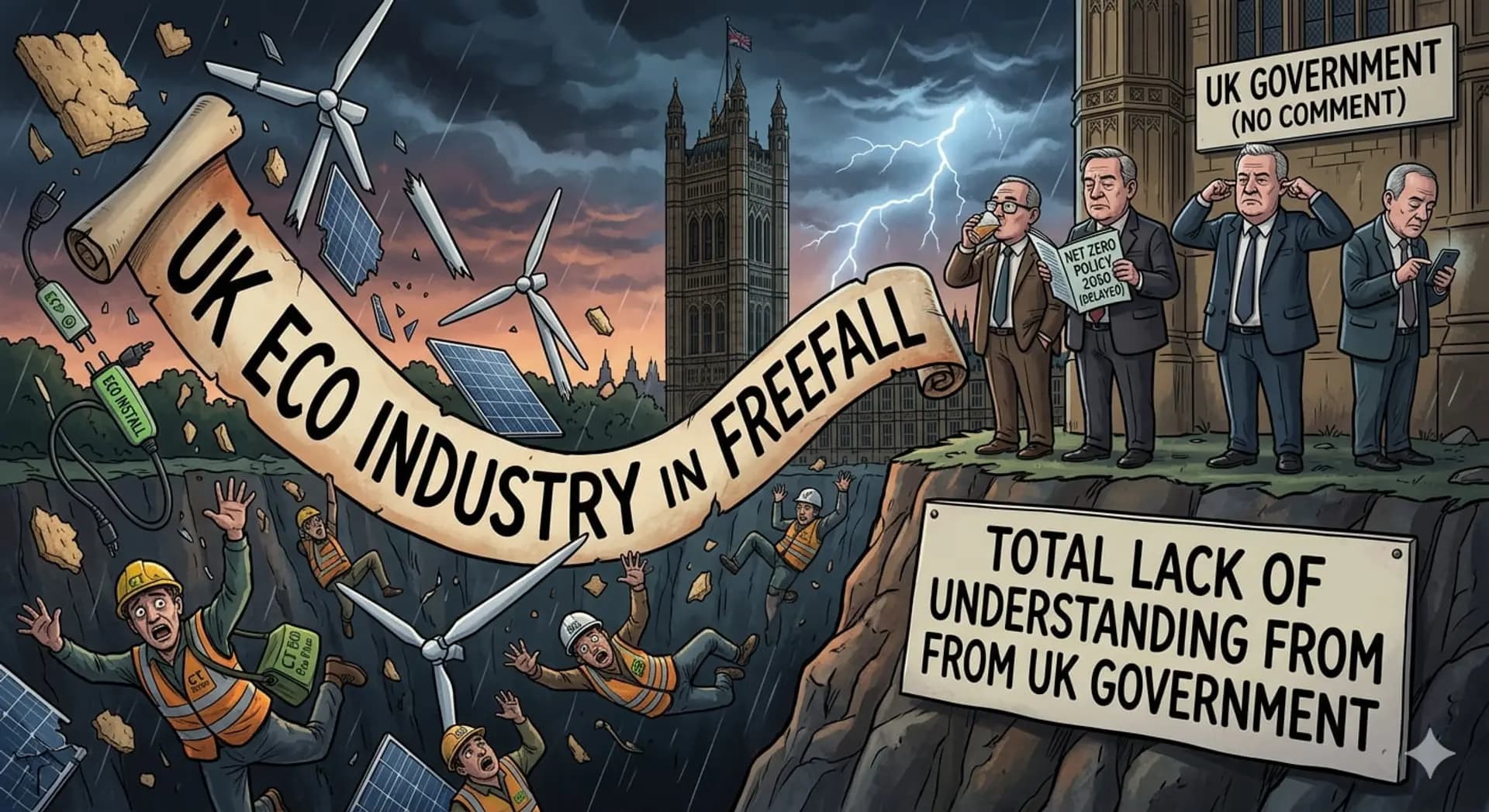
ECO Industry Simply Dumped Along with Workforce
The UK’s energy efficiency sector is currently navigating a period of unprecedented volatility. For 25 years, since the inception of obligation funding under the Blair administration, the industry has evolved through various iterations—from CERT and CESP to the Energy Company Obligation (ECO). However, the recent decision by the Chancellor in the Autumn Budget to terminate the ECO4 scheme without a viable successor has triggered what industry veterans describe as a "cataclysmic" collapse.
Data provided by Rachel Cole, a director at CT ECO Plus Limited, paints a harrowing picture of a sector in freefall. While the government maintains a public stance of commitment to "Net Zero," the reality on the ground is one of shuttered businesses, mass redundancies, and a complete breakdown in communication between the Department for Energy Security and Net Zero (DESNZ) and the firms tasked with decarbonising British homes.
Note From HouseWrapped : Rachel Cole provided with us with a comprehensive list of "Failed" and "At Risk" UK ECO companies. Obviously it's not for us to publish the list here, but it makes for depressing reading! Detailing over 65 organisations lost and more at risk, as well as almost 2,000 job losses (more likely 6,000+ as figures were gathered from previous reports & accounts). Also this figure is only job losses caused by insolvency and does NOT include job losses from organisations making redundancies to stay alive!
The Statistical Reality: A Sector on the Brink
The termination of ECO4 has not just slowed the industry; it has effectively ended it for many. According to Cole’s internal tracking, which monitors the London Gazette and Creditsafe alerts, the fallout was almost immediate. The timing is particularly brutal, as the cessation of funding coincided with a broader economic downturn that has seen UK corporate insolvencies reach their highest levels since the 2008-09 recession.
Rachel Cole notes that the "wave" of insolvencies follows a predictable but tragic pattern. Large firms, often backed by Venture Capital (VC) firms like SCIS, All Seasons, and CES, saw the lack of short-term opportunities in the Warm Homes Plan (WHP) and exited the market early to protect capital. Conversely, smaller sub-contractors and installers are being crushed by a "domino effect" where larger entities have failed to pay them, leading to a total depletion of cash reserves.
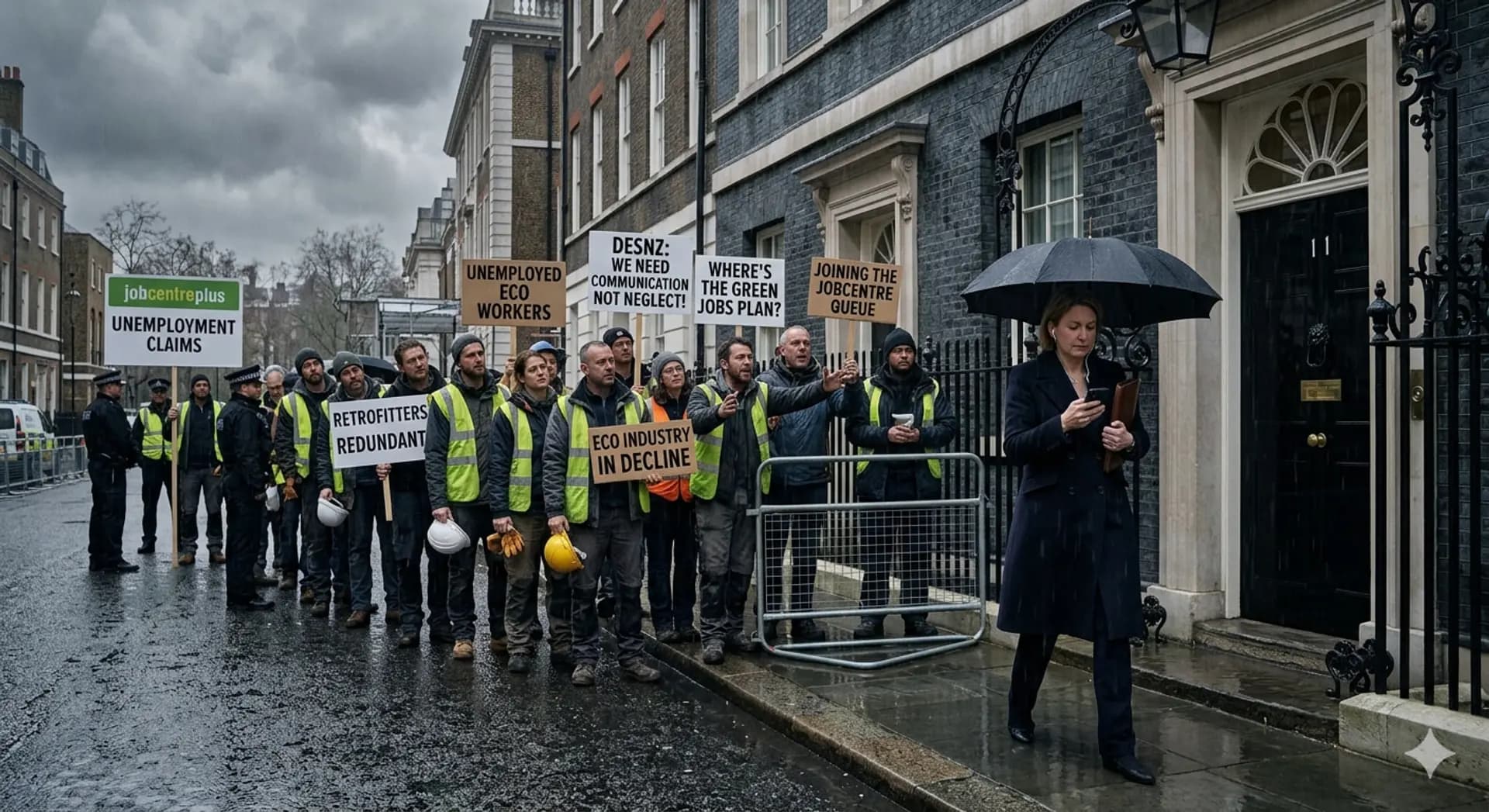
ECO Industry in Decline
The DESNZ "Black Hole": A Lack of Leadership
Perhaps more damaging than the loss of funding is the perceived indifference from the government bodies meant to champion this sector. According to internal reports from the Insulation Assurance Authority (IAA), the response from DESNZ directors has been characterized by a startling lack of empathy and a disconnect from the operational reality of the firms they regulate.
Cole highlights several "quotable quotes" from DESNZ officials that have circulated through the industry like wildfire:
On Job Losses: During an IAAF call, a DESNZ Director reportedly told industry leaders, "We can’t save all the jobs, have you thought about doing something else?".
On the Budget Shock: The same official claimed, "We found out about the cancellation of ECO at the same time as you did," suggesting a total lack of coordination between the Treasury and the energy department.
The Internal View: Most damningly, an internal email purportedly from a DESNZ Director stated, "Well there are only about 3000 job losses, and they probably deserved it".
This rhetoric suggests that the government views the retrofit sector as a "disposable" industry rather than a critical pillar of the UK's infrastructure and climate goals. The 3,000 figure cited by officials is also heavily disputed; Cole argues that because many businesses are making "mass redundancies to avoid insolvency," these numbers do not appear in the official Insolvency Service statistics, masking the true scale of the unemployment crisis.
The Miliband-Reeves Political Tug-of-War
The sudden cancellation of ECO4 appears to be a casualty of high-level political friction within the Cabinet. Industry insiders suggest that Ed Miliband, Secretary of State for Energy Security and Net Zero, has put forward several proposals to the Treasury to save the industry. These proposals were reportedly designed to bridge the gap between the end of ECO4 and the rollout of any successor scheme under the Warm Homes Plan.
However, these interventions were rejected by Chancellor Rachel Reeves. The resulting vacuum has left the industry without a "successor scheme," a move that Cole describes as "literally smashing up the whole industry". For a Labour government—historically the party of labour rights and green transition—to abruptly terminate an entire vocational sector has left long-term professionals in a state of shock.
"I genuinely never expected a Labour government to abruptly cancel an entire industry with no successor scheme... they simply don’t seem to care." — Rachel Cole, CT ECO Plus
Long Term Implications for the UK
The fallout of this policy decision extends far beyond the immediate balance sheets of firms like CT ECO Plus. By allowing the industry to collapse, the UK is losing:
Skills and Accreditation: Thousands of installers with Trustmark and PAS accreditations are leaving the sector for good. These skills are not easily replaced.
Infrastructure: Small and medium-sized "managing agents" and "principal contractors" who facilitated LAD, HUG, and ECO schemes are folding.
Trust: The "exemplary reputation" and "excellent customer feedback" built by firms over decades are being discarded.
When the government eventually decides to restart the retrofit engine, they will find that the mechanics have moved on to other industries. The loss of stamina among business owners who have weathered 25 years of policy changes only to be "smashed up" by the latest budget is palpable.
The "cataclysmic" effect Rachel Cole describes is a warning to the Treasury. Without immediate intervention or a clear roadmap for the successor to ECO4, the UK's green housing ambitions will remain a theoretical goal, unsupported by the actual workforce required to deliver it.