The Great Green Collapse: 80,000 Jobs at Risk as ECO4 Scheme Scrapped
How the dismantling of the Energy Company Obligation is fuelling an employment "bloodbath" and stalling net-zero ambitions
Share this article
Don't keep this knowledge to yourself!
Audio Version Available
Listen to this article while you multitask
UK Energy Efficiency Crisis: 80,000 Jobs at Risk as ECO4 Ends
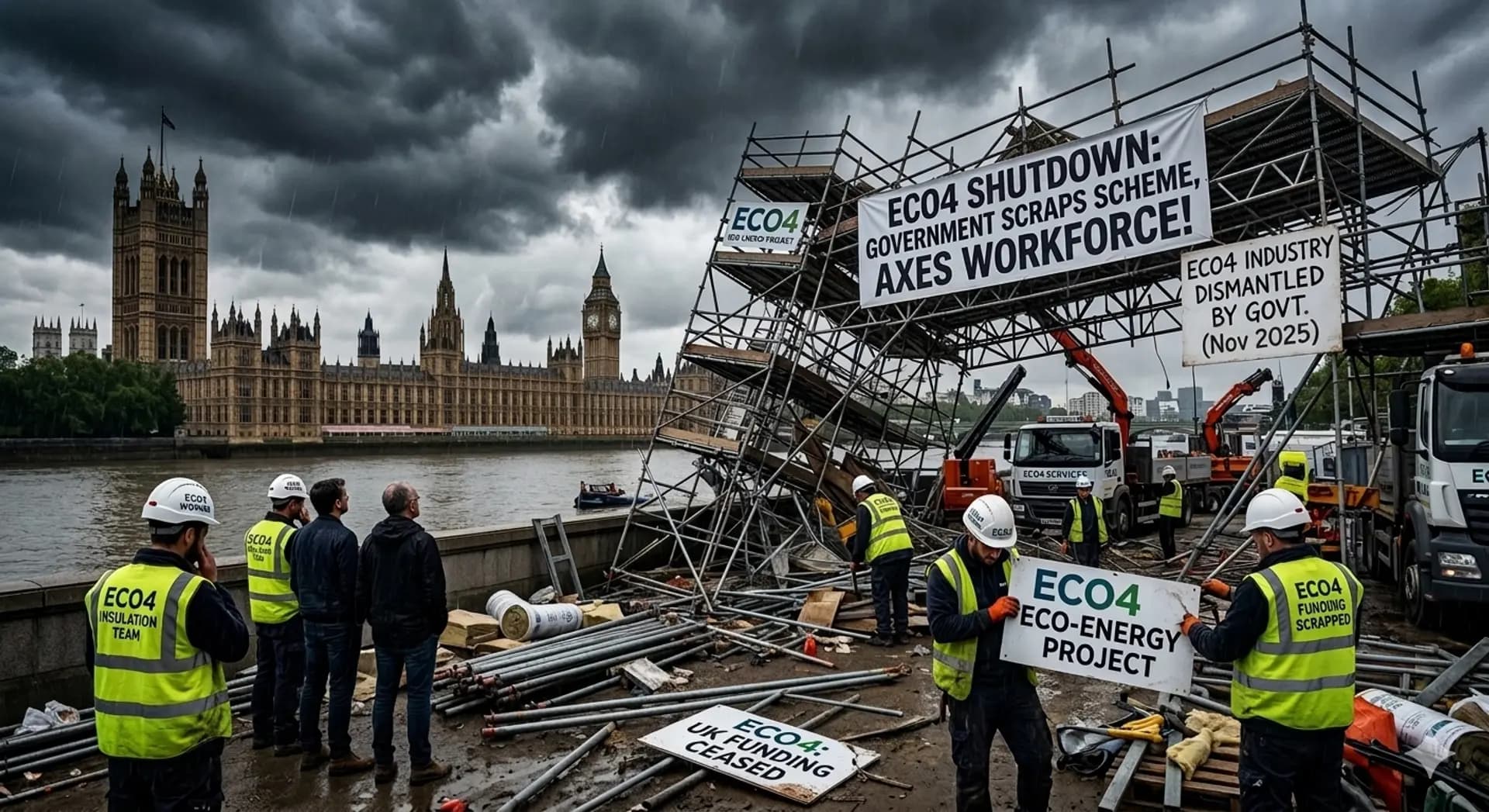
In a move that has sent shockwaves through the UK’s energy efficiency sector, the Labour government’s decision to dismantle the Energy Company Obligation (ECO4) scheme has been branded a “catastrophic failure” of policy. Despite a manifesto centred on easing the cost-of-living crisis and stimulating the job market, the Chancellor’s Autumn Budget has effectively pulled the rug from under an industry that was supposed to be the backbone of Britain’s green transition.
The fallout is already visible. While the government maintains a rhetoric of “getting people into work,” the reality on the ground is a mounting wave of redundancies. According to a scathing report from the Installation Assurance Authority Federation (IAAF), citing the latest Office for National Statistics (ONS) labour market data, the industry is bracing for an employment bloodbath.
A Scheme Ended with No Safety Net
The ECO4 scheme, designed to help low-income and vulnerable households reduce their energy bills through measures like insulation and heat pumps, was officially terminated in the recent Autumn Budget. Chancellor Rachel Reeves justified the move by claiming it would save the average household approximately £150 a year by removing green levies from energy bills.
However, industry experts point out a fatal flaw: the scheme has been ended without a functional successor in place. While the government has pointed toward the future "Warm Homes Plan," the details of this new initiative remain shrouded in mystery and bureaucratic delay. By the time the Warm Homes Plan is fully operational, the specialized supply chain built over a decade of ECO iterations may no longer exist.
“This is the ‘stop-start’ policy at its most destructive,” says Nigel Donohue, CEO of the IAAF. “To end a major national infrastructure project without a seamless transition is not just negligent; it’s an act of economic self-harm. We are seeing a 30-year legacy of fuel poverty support dismantled in a single budget cycle.”
The Human Cost: Thousands of Jobs Lost
The most damning indictment of the government’s decision is the scale of job losses. While Labour ministers frequently discuss their desire to create "green jobs," their current actions are achieving the exact opposite.
The IAAF’s analysis of the latest ONS Labour Market report paints a grim picture. The data suggests that the UK already has the fastest annual increase in unemployment in the G7, with the national rate climbing to 5.2%. Within the energy efficiency sector specifically, the impact is acute. The IAAF reports that over 2,800 jobs have already been lost in the last three months alone as companies react to the scheme's termination.
Worse still, the ONS figures and industry surveys indicate that nearly 80,000 skilled professionals—insulators, heat pump engineers, and retrofit coordinators—are expected to be made redundant over the next 12 months. This represents a staggering loss of expertise at a time when the UK desperately needs to upgrade its housing stock to meet net-zero targets.
The Cost-of-Living Contradiction
The government’s rationale—that cutting the ECO scheme will lower energy bills—has been met with scepticism. Critics argue that while a £150 reduction in levies provides a small, temporary reprieve, it does nothing to solve the root cause of high bills: the UK's draughty, energy-inefficient homes.
By ending ECO4, the government has essentially removed the only mechanism that provided free or heavily subsidized deep-retrofit measures for those in fuel poverty. For the 6.1 million households currently living in cold, damp homes, the "saving" on their bill is a pittance compared to the hundreds of pounds they would have saved annually through the insulation measures the scheme once provided.
“The Chancellor is giving with one hand and taking with a sledgehammer with the other,” says one industry insider. “You cannot claim to be tackling the cost-of-living crisis while simultaneously destroying the industry that actually makes homes cheaper to heat. It’s a short-term political win that creates a long-term social catastrophe.”
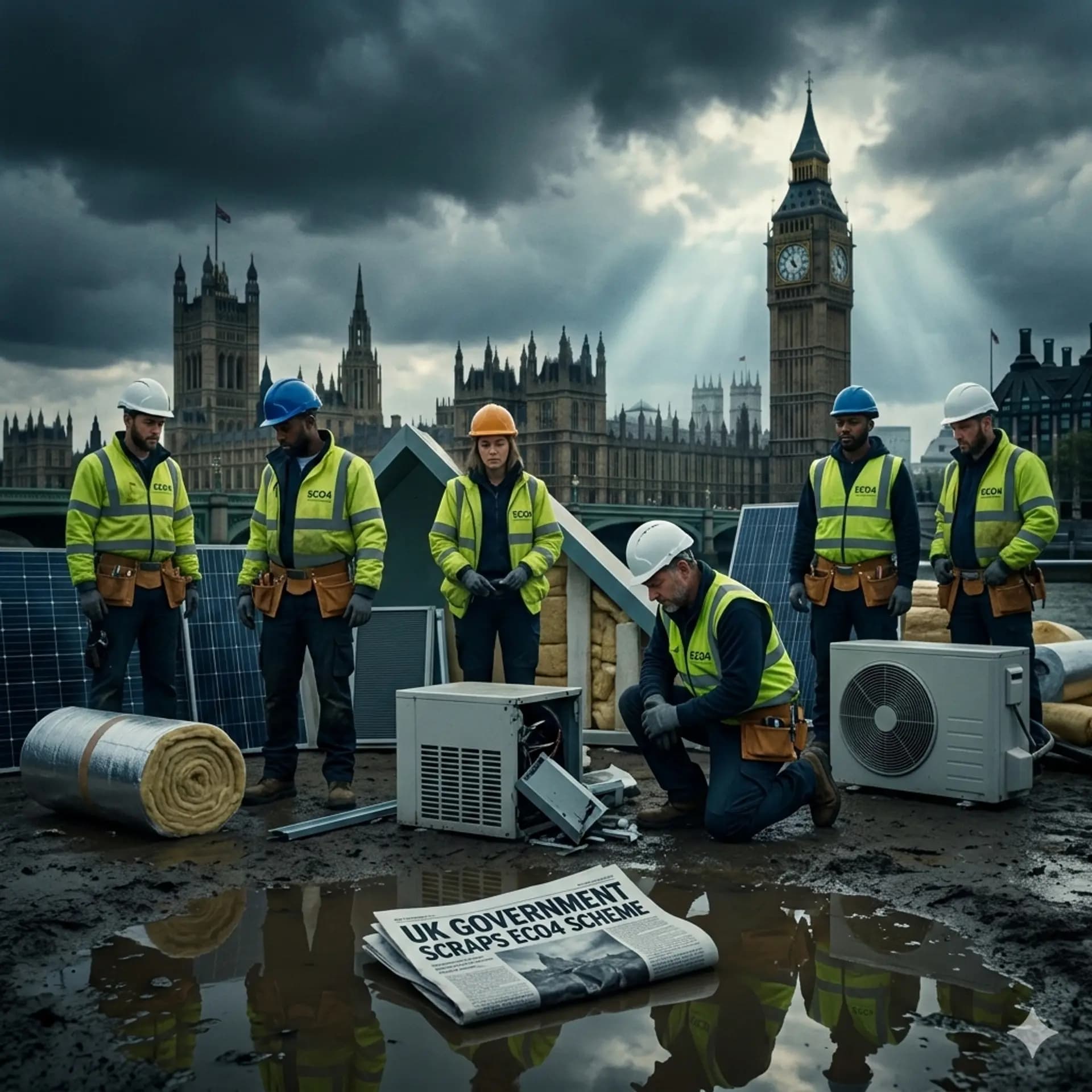
ECO4 Scrapped
A Supply Chain in Freefall
The uncertainty has created a "market attrition" that many SMEs (Small and Medium Enterprises) will not survive. An IAAF survey revealed that 76% of businesses in the retrofit sector depend on ECO for their primary income. With the scheme ending and no clear replacement, 88% of these firms report having six months or less of cash reserves.
The government’s own figures from the National Audit Office (NAO) previously highlighted "systemic failures" in some ECO installations, which the Chancellor used as leverage to scrap the program. However, industry leaders argue that instead of fixing the oversight and regulation, the government chose to burn the entire house down.
The result is a sector in "industrial contagion." As installers go bust, the manufacturers of insulation and green technology are also seeing their order books evaporate. The scale of the predicted job losses is twenty times higher than the recent threats to the British steel sector, yet it has received a fraction of the government's attention.
The "Warm Homes" Mirage
The government continues to promise that the "Warm Homes Plan" will eventually fill the void, with an additional £1.5 billion in capital investment. But for the thousands of workers currently receiving redundancy notices, "eventually" is not good enough.
The transition is being handled with such poor timing that experts fear the UK will become the first government in three decades not to have a dedicated fuel poverty scheme in active operation. This policy gap means that while the government waits for its new plan to clear the Treasury, the skilled workforce required to deliver it is being forced into other industries or onto the unemployment line.
Conclusion: A Crisis of Credibility
The state of the UK’s energy efficiency policy is currently a shambles. The Labour government, which campaigned on the promise of economic stability and a "Green Prosperity Plan," is now overseeing the dismantling of the very industry it claimed to champion.
By ending ECO4 without a successor, the Chancellor hasn't just saved £150 on a bill; she has potentially ended the careers of 80,000 workers and left millions of vulnerable people in the cold. If the ONS predictions hold true, the "terrible state" of the ECO4 scheme will be remembered not as a fiscal correction, but as the moment the UK's green ambitions—and its commitment to the working class—were sacrificed for a headline.
For the installers packing up their vans and the families facing another winter in uninsulated homes, the government's talk of "getting Britain back to work" rings hollow. The numbers from the IAAF and ONS do not lie: the crisis in the energy efficiency sector is real, it is immediate, and it is entirely policy-driven.
This government and the previous one just seem to be totally incapable of transitioning from one scheme to another without issues. It makes it all the more incredible when you think the ECO schemes used to run of four year cycles, surely that is enough time to get ready for the next!